
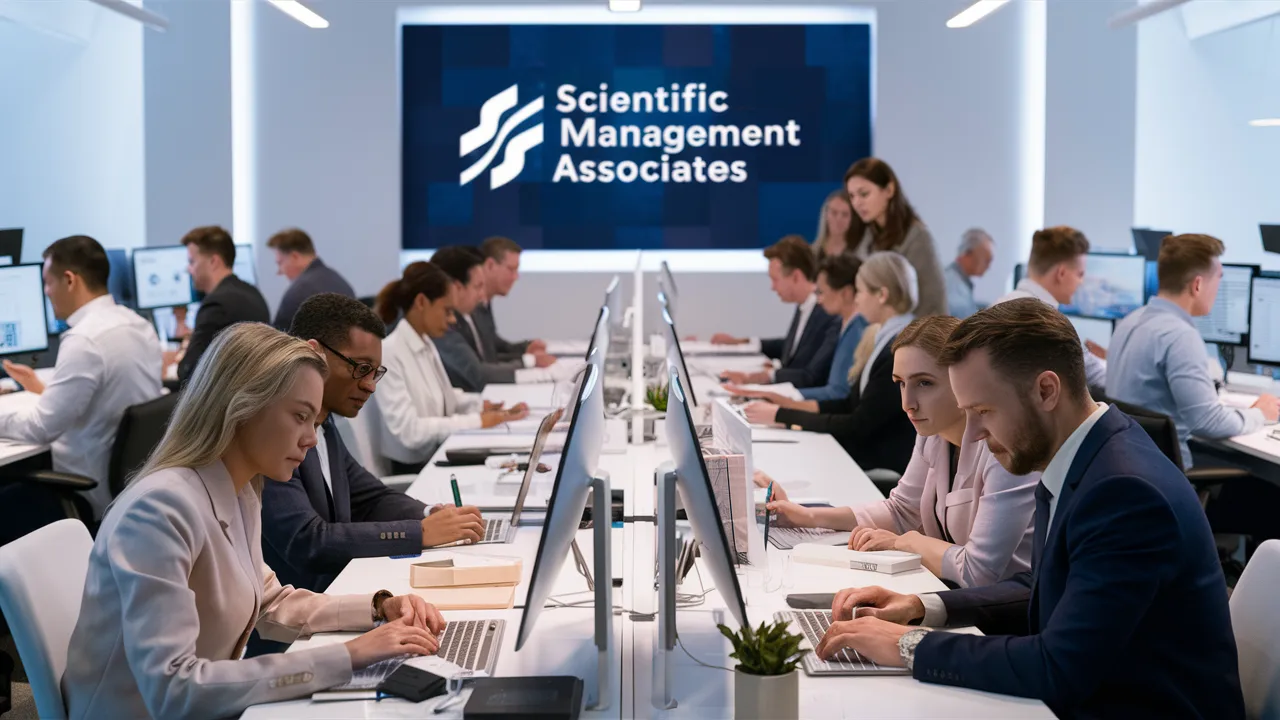
In the modern business environment, organizations face constant pressure to improve efficiency, reduce operational costs, and remain competitive in rapidly changing markets. Achieving these goals requires a structured approach to management that integrates strategic planning, data analysis, and systematic operational improvement. Within this context, firms such as Scientific Management Associates play an important role in helping businesses optimize their processes and develop sustainable growth strategies.
The concept behind scientific management focuses on applying analytical methods and systematic thinking to improve organizational performance. Instead of relying on intuition or traditional practices alone, scientific management encourages leaders to analyze workflows, evaluate productivity metrics, and implement structured processes that maximize efficiency. Consulting organizations that specialize in these methodologies help companies identify inefficiencies, streamline operations, and adopt best practices that lead to measurable results.
Understanding the work and influence of Scientific Management Associates requires examining the broader principles of scientific management, the role of consulting firms in organizational development, and the impact that data-driven decision-making can have on modern businesses.
The Origins of Scientific Management
The concept of scientific management emerged in the early twentieth century as organizations sought more efficient ways to manage industrial production. The core idea behind this management philosophy was that work processes could be analyzed scientifically to determine the most effective methods for performing tasks.
Early advocates of scientific management believed that productivity could be improved by studying workflow patterns, measuring performance, and eliminating unnecessary steps in production processes. This systematic approach allowed organizations to create standardized procedures that increased efficiency and reduced waste.
Although the original focus was largely on manufacturing, the principles of scientific management have evolved over time and are now applied in many industries, including technology, healthcare, logistics, and financial services. Modern consulting firms, including Scientific Management Associates, build upon these foundational ideas by integrating advanced analytics, digital tools, and strategic management frameworks.
The Role of Scientific Management Associates in Business Consulting
Consulting firms that specialize in scientific management approaches provide organizations with expert analysis, strategic insights, and operational improvement strategies. Their primary goal is to help businesses operate more effectively by identifying inefficiencies and implementing optimized processes.
Scientific Management Associates typically focus on several core areas of consulting:
Operational Efficiency
One of the primary objectives of management consulting is to improve operational efficiency. By analyzing workflows and identifying bottlenecks, consultants can recommend strategies that streamline processes and reduce unnecessary costs.
Strategic Planning
Organizations often require structured strategies to achieve long-term success. Consultants help businesses define clear objectives, evaluate market conditions, and develop actionable plans that align with organizational goals.
Performance Measurement
Data-driven decision-making is a central component of modern management. Consultants analyze performance metrics to determine whether processes are delivering the desired outcomes and identify areas for improvement.
Process Optimization
Through detailed analysis of workflows and operations, consulting firms can redesign processes to improve productivity and ensure that resources are used efficiently.
These services allow companies to enhance both short-term performance and long-term strategic positioning.
The Importance of Data-Driven Decision Making
Modern organizations generate enormous amounts of data through daily operations, customer interactions, and market analysis. Transforming this data into actionable insights is essential for maintaining competitiveness.
Scientific management consulting firms use advanced analytical tools and statistical models to evaluate organizational performance. By examining patterns within operational data, consultants can identify opportunities to increase efficiency and reduce operational risks.
Data-driven management provides several benefits:
-
Improved accuracy in decision-making
-
Better understanding of customer behavior
-
Increased operational transparency
-
Stronger performance forecasting
By incorporating these analytical methods, Scientific Management Associates help organizations move beyond guesswork and adopt structured, evidence-based management strategies.
Enhancing Organizational Productivity
Productivity is one of the most critical indicators of organizational success. Businesses that consistently improve productivity can deliver higher value to customers while maintaining competitive pricing and profitability.
Scientific management consulting focuses on identifying ways to increase productivity without sacrificing quality. This often involves:
-
Streamlining workflow processes
-
Eliminating redundant tasks
-
Implementing automation technologies
-
Improving communication between departments
When these improvements are implemented effectively, organizations can achieve higher output levels while maintaining a balanced and sustainable work environment.
Leadership and Organizational Development
In addition to operational improvements, consulting firms also play a role in developing effective leadership practices. Successful organizations require leaders who can guide teams, inspire innovation, and maintain a clear strategic vision.
Scientific Management Associates support leadership development by helping executives understand how organizational structures, performance metrics, and management practices influence overall productivity.
Effective leadership development programs often focus on:
-
Strategic thinking and decision-making
-
Team collaboration and communication
-
Change management and adaptability
-
Performance evaluation and feedback systems
By strengthening leadership capabilities, organizations can create cultures that encourage innovation, accountability, and continuous improvement.
Adapting Scientific Management to the Digital Age
While the original principles of scientific management were developed during the industrial era, modern technology has significantly expanded the scope of these ideas. Digital tools now allow organizations to collect and analyze data in real time, making it possible to evaluate performance with unprecedented precision.
Technologies such as artificial intelligence, automation, and predictive analytics enable businesses to identify trends, forecast demand, and optimize operations more effectively than ever before.
Consulting firms such as Scientific Management Associates integrate these technologies into their methodologies, ensuring that organizations remain competitive in an increasingly digital economy.
The Future of Management Consulting
The consulting industry continues to evolve as businesses face new challenges and opportunities. Global competition, technological innovation, and changing consumer expectations require organizations to adapt quickly and adopt more sophisticated management practices.
Future trends in consulting may include:
-
Greater use of artificial intelligence in decision-making
-
Advanced predictive analytics for business forecasting
-
Increased emphasis on sustainability and ethical leadership
-
Integration of digital transformation strategies
Consulting organizations that embrace these trends will be better positioned to support businesses in navigating complex economic environments.
Conclusion
The role of Scientific Management Associates reflects the ongoing importance of structured management practices and data-driven decision-making in modern organizations. By combining analytical methods with strategic insights, consulting firms help businesses improve productivity, optimize operations, and achieve long-term success.
Scientific management principles continue to evolve as technology and global markets reshape the business landscape. Organizations that adopt these methodologies gain valuable tools for improving efficiency, enhancing leadership effectiveness, and maintaining competitive advantages.
As companies continue to seek innovative ways to improve performance, the expertise provided by consulting firms like Scientific Management Associates will remain an essential component of organizational growth, operational excellence, and sustainable business development.
FAQ About Scientific Management Associates
What is Scientific Management Associates?
Scientific Management Associates typically refers to a consulting organization focused on improving business operations through data-driven management strategies and process optimization.
What is scientific management in business?
Scientific management is a management philosophy that uses systematic analysis and measurable data to improve efficiency and productivity in organizations.
How do consulting firms improve organizational performance?
Consulting firms analyze workflows, evaluate performance metrics, and implement strategies that optimize processes and reduce inefficiencies.
Why is data-driven decision-making important?
Data-driven management helps organizations make more accurate and informed decisions by relying on measurable evidence rather than assumptions.
How is scientific management used today?
Modern organizations apply scientific management principles using advanced analytics, digital tools, and performance monitoring systems to improve operations and productivity.
