
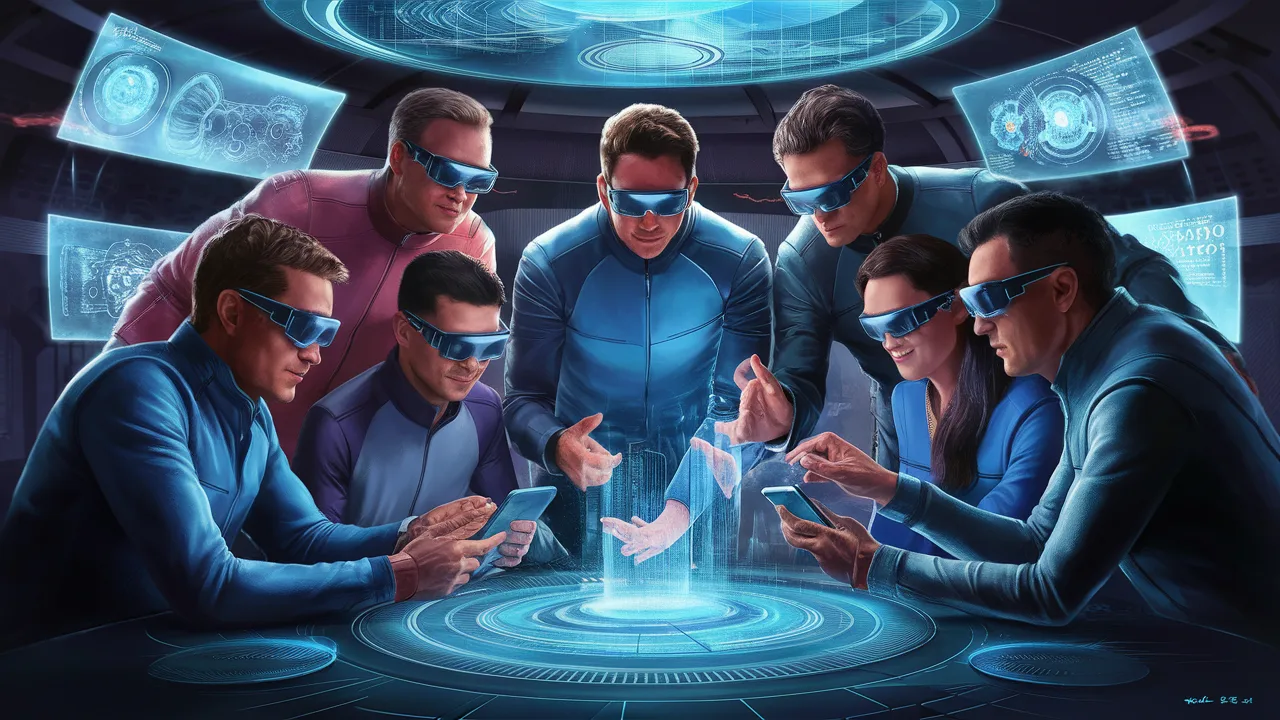
For more than a decade, smartphones have been the center of the digital world. Devices in our pockets have transformed how we communicate, work, shop, and access information. However, as technology evolves rapidly, tech giants are now envisioning a future beyond smartphones, exploring new platforms that may redefine how people interact with digital technology. Companies such as Apple, Google, Meta, Microsoft, and Samsung are investing billions of dollars in emerging technologies that could eventually replace or reduce dependence on traditional smartphones.
The concept of a post-smartphone future includes innovations such as augmented reality glasses, artificial intelligence assistants, wearable technology, immersive virtual worlds, and ambient computing. These technologies aim to make digital experiences more seamless, natural, and integrated into everyday life. Instead of constantly looking down at screens, users may interact with technology through voice, gestures, or smart environments.
This article explores how tech giants envision the future beyond smartphones, highlighting the technologies they are developing, the trends shaping the next generation of digital devices, and the potential impact on businesses, consumers, and society.
The Rise and Dominance of Smartphones
How Smartphones Became Central to Modern Life
Since the introduction of Tech Giants Envision Future Beyond Smartphones in the late 2000s, these devices have become essential tools for billions of people worldwide. Smartphones combine communication, entertainment, navigation, banking, and productivity in a single device. The ability to access apps, high-speed internet, and cloud services turned smartphones into the most influential consumer technology of the 21st century.
Companies like Apple and Samsung led the smartphone revolution by continuously improving hardware performance, camera technology, and software ecosystems. Meanwhile, companies like Google developed operating systems and services that expanded smartphone capabilities even further.
However, despite constant upgrades, smartphones are gradually reaching a maturity stage. Innovations have slowed, and most new devices provide incremental improvements rather than revolutionary changes. This shift is one reason why tech giants are exploring technologies that could eventually replace smartphones as the primary digital interface.
Why Tech Companies Are Looking Beyond Smartphones
Technological Limitations of Smartphones
While smartphones remain powerful tools, they have certain limitations. Small screens restrict immersive experiences, constant device usage can cause digital fatigue, and handheld devices require users to repeatedly check their screens for updates and notifications.
Technology companies are now exploring ways to create more natural and immersive digital interactions that integrate seamlessly into everyday environments. The goal is to make technology less intrusive while still providing instant access to information and communication.
The Next Phase of Human–Technology Interaction
The future of technology is expected to focus on ambient computing, where digital systems operate in the background and respond to users automatically. Instead of opening apps on a phone, users may interact with devices through voice commands, smart glasses, or wearable sensors.
This shift would transform how people engage with technology by making digital experiences more intuitive and context-aware.
Emerging Technologies That May Replace Smartphones
Augmented Reality (AR) Glasses
One of the most promising technologies in the post-smartphone era is augmented reality glasses. These lightweight devices overlay digital information onto the real world, allowing users to view navigation directions, messages, and interactive content directly in their field of vision.
Major tech companies are investing heavily in AR technology because it offers the potential to replace smartphones with a more immersive interface. Instead of holding a device, users could simply look at objects and access digital information instantly.
AR glasses could transform industries such as education, healthcare, tourism, and retail by providing real-time information in everyday environments.
Artificial Intelligence Assistants
Another key element of the future beyond smartphones is advanced artificial intelligence. AI assistants are becoming increasingly capable of understanding natural language, predicting user needs, and performing complex tasks automatically.
Instead of navigating through apps, users may simply ask an AI assistant to schedule meetings, order products, control smart home devices, or search for information. Over time, these assistants may become the primary interface for digital interaction.
Wearable Technology
Wearable devices such as smartwatches, smart rings, and health trackers are already gaining popularity. These devices monitor health data, track physical activity, and provide quick notifications without requiring users to check their phones constantly.
Future wearable devices could combine health monitoring, biometric authentication, and AI-powered insights, creating a new ecosystem of personal technology that operates continuously throughout the day.
Virtual Reality and Immersive Environments
Virtual reality is another area where tech companies are investing heavily. VR devices create immersive digital environments that allow users to work, socialize, and explore virtual spaces.
The concept of a digital metaverse has emerged from this technology, where people interact in virtual worlds for entertainment, education, and business collaboration. If VR technology becomes lighter, more affordable, and more powerful, it could reshape digital interaction in ways that go far beyond smartphone screens.
How the Post-Smartphone Era Could Change Daily Life
More Natural Technology Experiences
The next generation of devices will likely focus on hands-free interaction. Users may control devices using voice commands, gestures, or eye movement rather than tapping screens.
This approach could make technology feel more integrated into daily routines rather than distracting from them.
Smarter Connected Environments
The future beyond smartphones also involves smart environments where homes, workplaces, and cities respond intelligently to human behavior. Sensors and connected devices could adjust lighting, temperature, security, and entertainment systems automatically.
This vision of ambient computing means that digital services will surround users rather than being confined to a single device.
Challenges Facing the Post-Smartphone Future
Despite exciting possibilities, several challenges remain before smartphones can be replaced.
First, new technologies must become affordable, comfortable, and widely accessible. Devices such as AR glasses must be lightweight and stylish enough for everyday use.
Second, companies must address privacy and security concerns, especially when devices continuously collect data from their surroundings.
Finally, the transition will require new software ecosystems, developer tools, and user habits that support the next generation of devices.
Conclusion
The idea that tech giants envision a future beyond smartphones reflects the natural evolution of technology. While smartphones will remain important for years to come, companies are already investing in innovations that could eventually transform how people interact with digital systems.
Technologies such as augmented reality glasses, artificial intelligence assistants, wearable devices, and immersive virtual environments represent the next frontier of human-computer interaction. These innovations aim to make technology more intuitive, integrated, and responsive to everyday needs.
As these technologies mature, the world may gradually move toward a post-smartphone era, where digital experiences are seamlessly woven into our surroundings rather than confined to a small screen in our hands. The companies leading this transformation are shaping a future where technology becomes more invisible, more intelligent, and more connected to the human experience.
FAQ: Tech Giants Envision Future Beyond Smartphones
What does “future beyond smartphones” mean?
It refers to emerging technologies that could eventually replace or reduce reliance on smartphones, such as augmented reality devices, wearable technology, and AI assistants.
Why are tech companies exploring alternatives to smartphones?
Smartphones are reaching a maturity stage, and companies want to create more immersive and natural digital experiences.
What technologies could replace smartphones in the future?
Possible replacements include AR glasses, AI assistants, wearable devices, and virtual reality systems.
Will smartphones disappear completely?
Smartphones are unlikely to disappear immediately, but they may gradually become less central as new technologies develop.
Which companies are leading the development of post-smartphone technology?
Major technology companies such as Apple, Google, Meta, Microsoft, and Samsung are investing heavily in the next generation of digital devices.
